Integration and the area under a curve
Mathematics · Senior school calculus and first-year maths · about 10 min
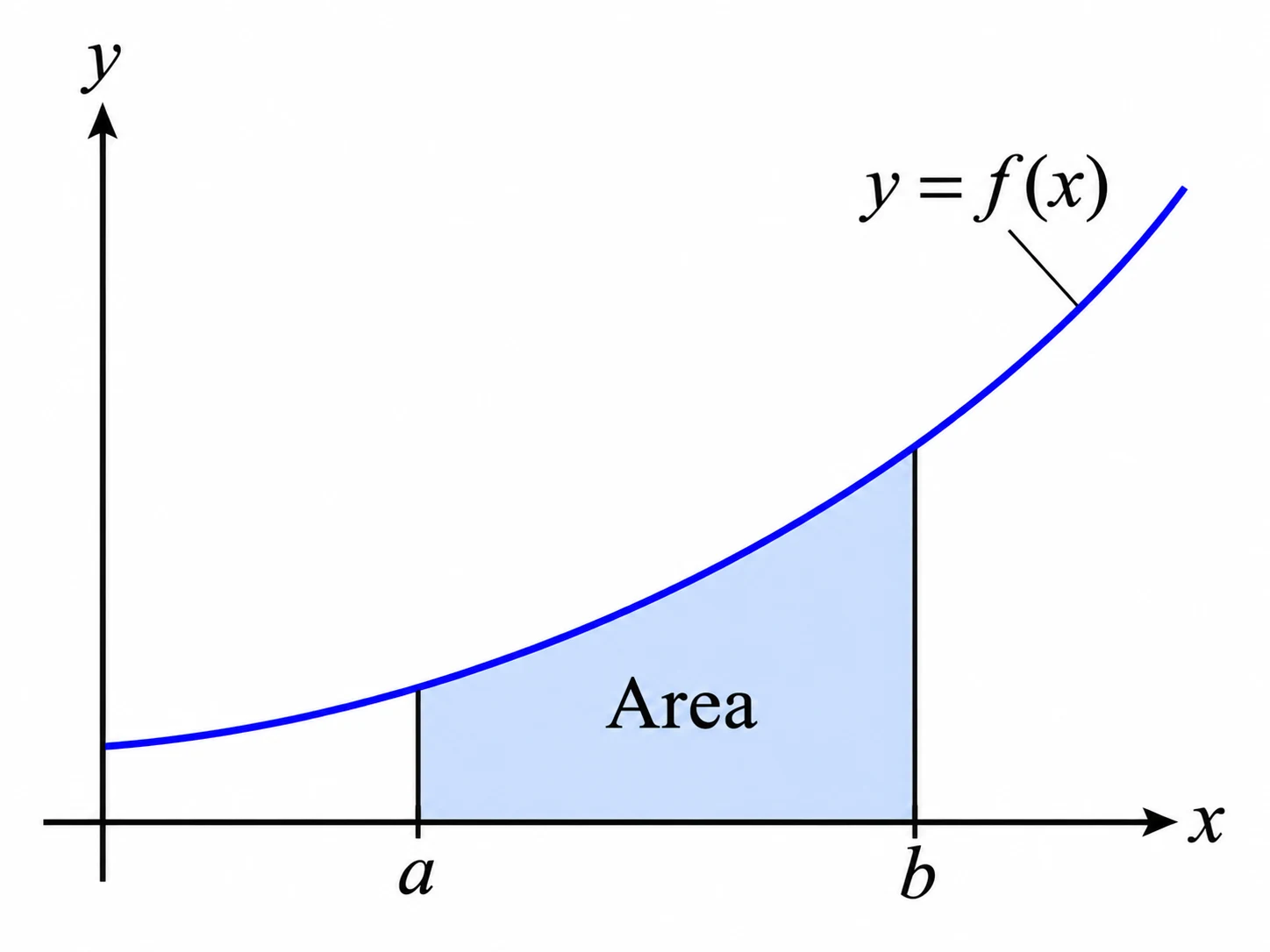
Integration is differentiation in reverse, and it adds things up: the area under a curve, the distance travelled from a speed graph, the total work done by a changing force. The Fundamental Theorem of Calculus connects the two ideas.
The key idea
If , then the definite integral from to is
and for powers, (for ).
Try it yourself
Indefinite and definite integrals
- An indefinite integral is a family of functions: . The is there because any constant disappears when you differentiate.
- A definite integral has limits and gives a number: . The constants cancel, so no .
Area, and when it goes negative
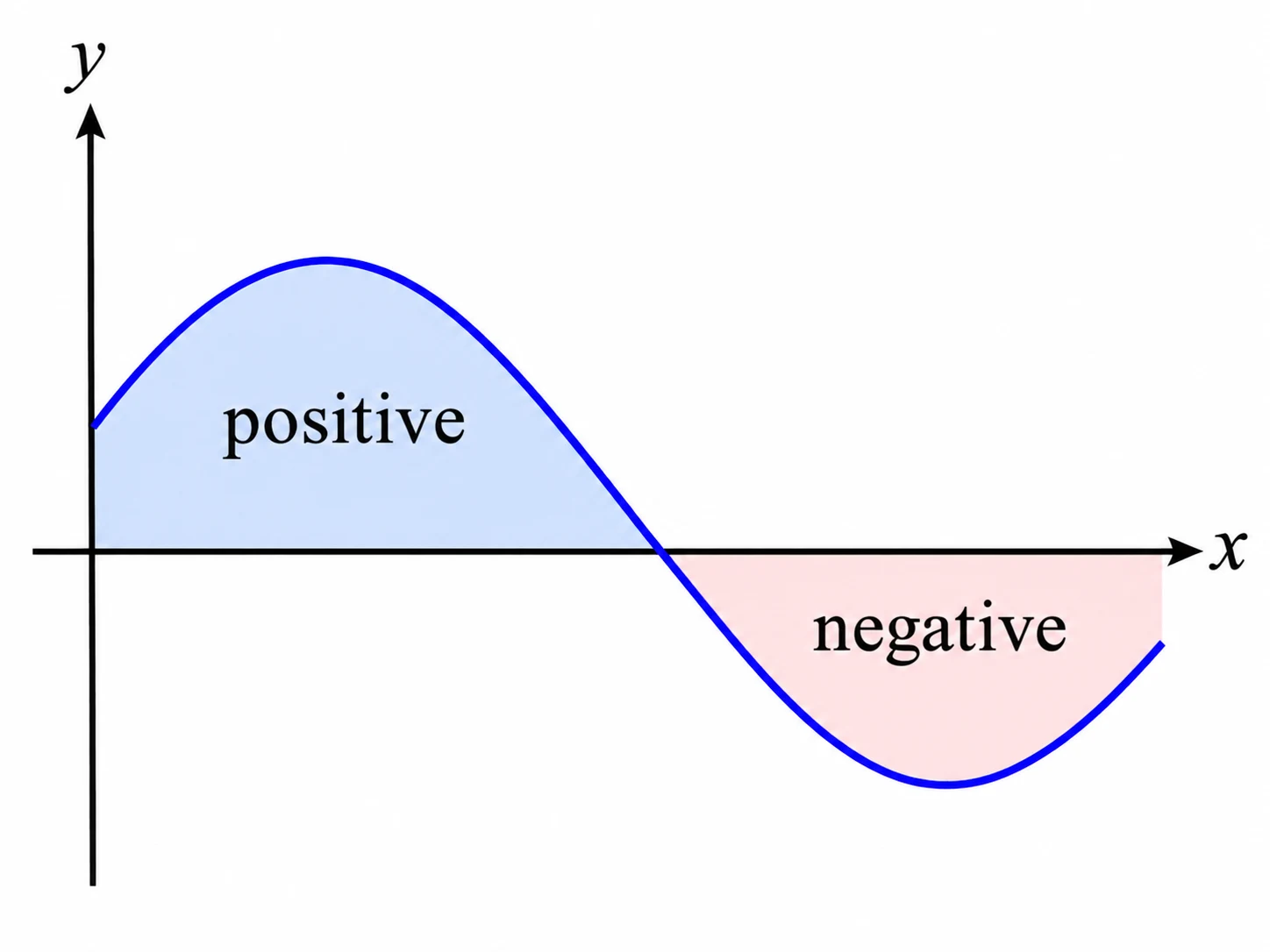
For a curve above the -axis, is the area between the curve and the axis. Parts below the axis count as negative. To find total area when a curve crosses the axis, split the integral at the roots and add the sizes of each part.
Worked example: a definite integral
Evaluate .
Show the solution
Antiderivative:
Apply the limits:
Since between and , this is the area under the curve: square units.
Common mistakes
Forgetting + C on an indefinite integral
Indefinite integrals always need . Definite ones don't, because it cancels.
Integrating as
That's differentiating. Integrating raises the power and divides by the new power: .
Treating area below the axis as positive
The integral counts it as negative. For total area, split at the roots and add the absolute values.
Check your understanding
1. What is ?
2. What is ?
3. A speed-time graph is integrated over a time interval. What does the result give?
Still not sure? Talk it through.
Waypoint Mentor's tutor explains this out loud, works through your own problems on a whiteboard, and checks you've got it. Free to start.