Moments and levers
Physics · Senior school physics · about 7 min
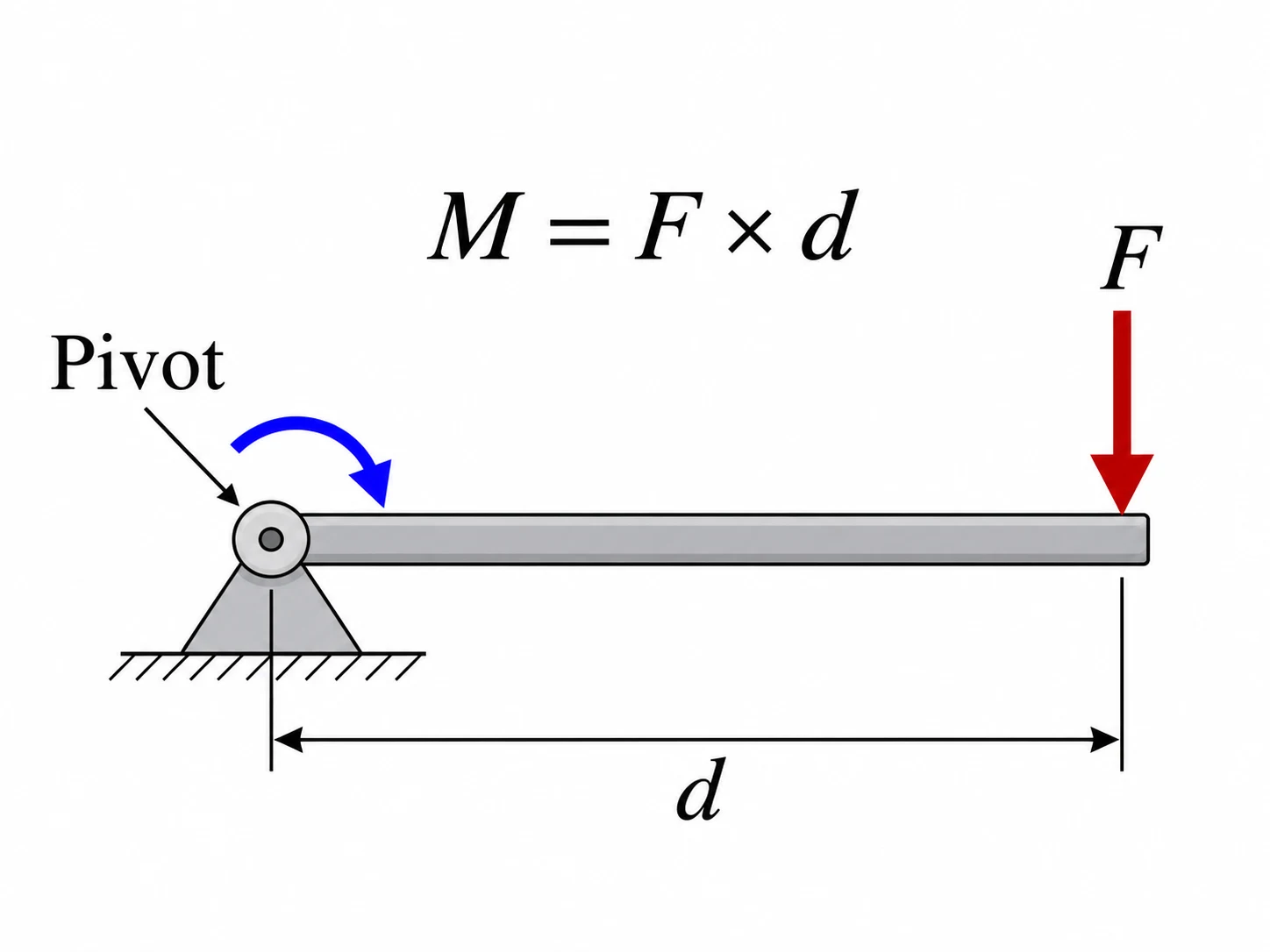
A spanner, a seesaw and a wheelbarrow all work the same way: a force applied further from a pivot has a bigger turning effect. That turning effect is a moment, and balancing moments is the basis of statics in engineering.
The key idea
The moment of a force about a pivot is the force times its perpendicular distance from the pivot:
An object is balanced when the clockwise moments equal the anticlockwise moments:
Try it yourself
Perpendicular distance matters
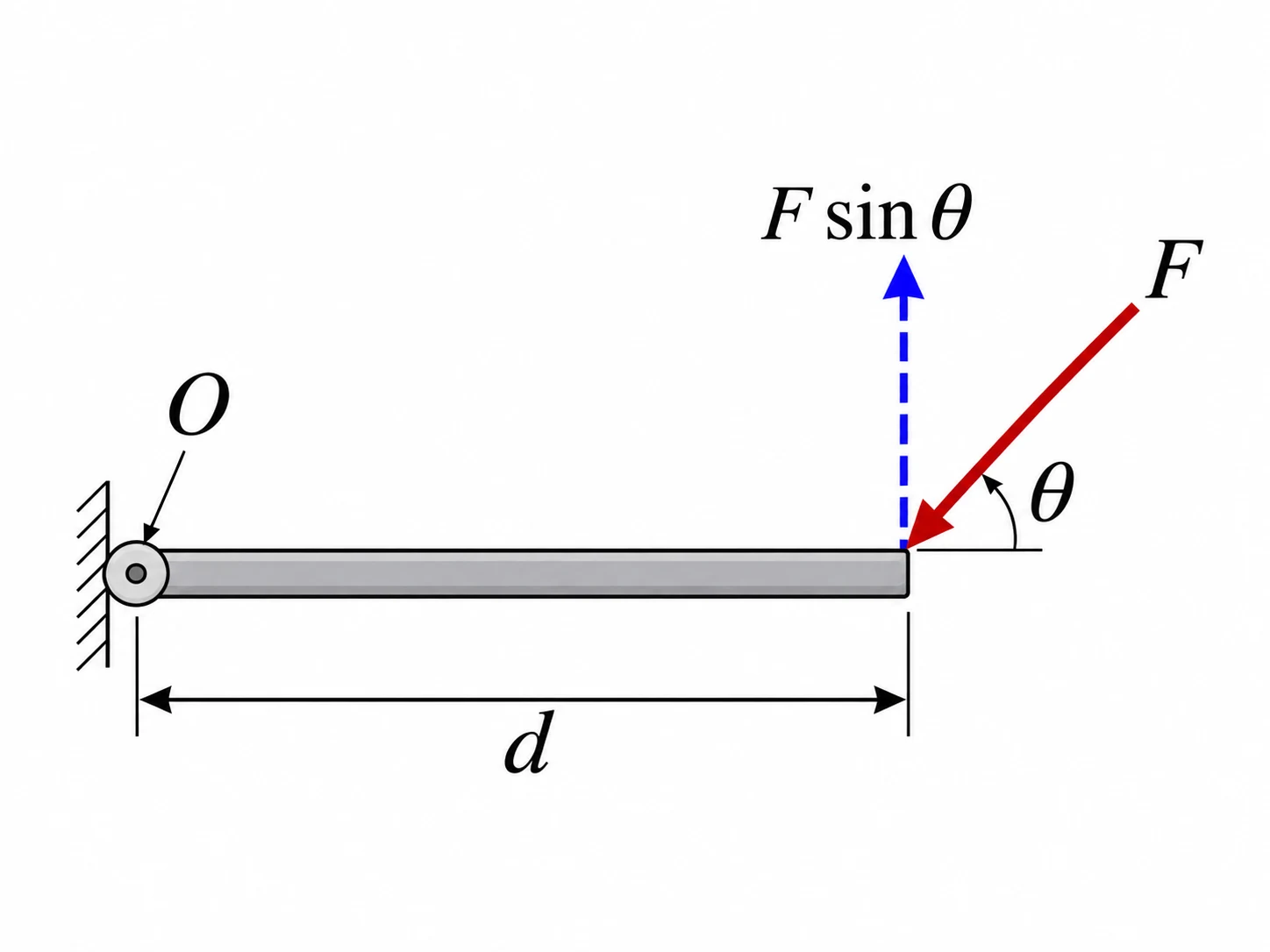
The distance in is measured at right angles to the force's line of action. Pushing on a door at an angle, only the part of your push that's perpendicular to the door turns it, which is why pushing straight on is easiest.
Levers trade force for distance
A long handle lets a small force balance a large one: if your effort is times further from the pivot than the load, you need only of the force. The catch is that your hand has to move times further. Levers don't create energy; they change how it's applied.
Worked example: balancing a seesaw
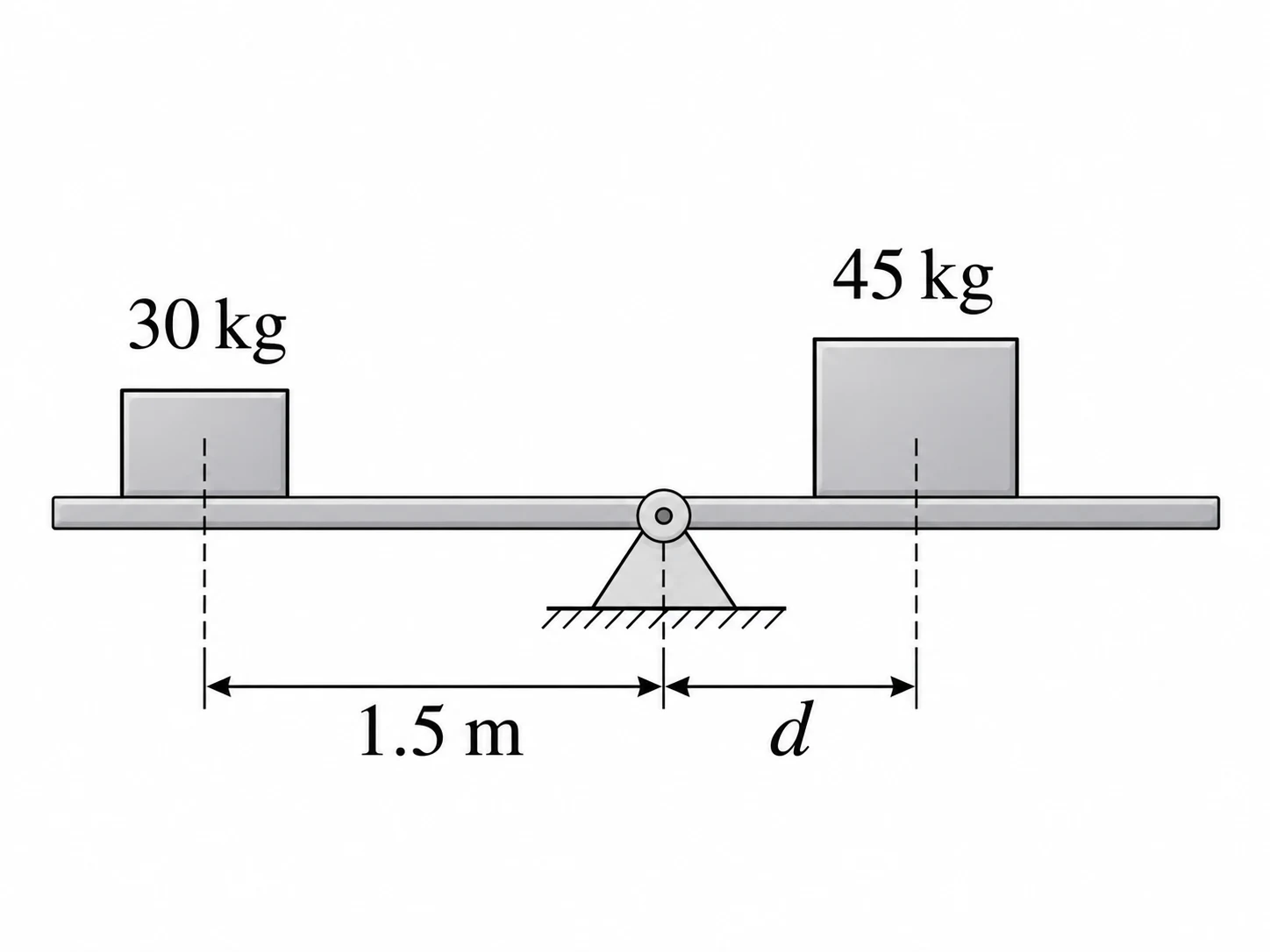
A kg child sits m from the pivot of a seesaw. Where must a kg child sit on the other side to balance it?
Show the solution
The weights are and , but cancels, so work with the masses.
The heavier child sits closer to the pivot, m away.
Common mistakes
Measuring the distance along the lever instead of perpendicular to the force
Use the perpendicular distance. For an angled force, use .
Forgetting the weight of the lever itself
A uniform beam's weight acts at its centre and has its own moment about the pivot.
Mixing units like grams and kilograms on each side
Keep the same units on both sides; if you use masses instead of weights, must cancel from both.
Check your understanding
1. A N force acts m from a pivot, at right angles. What is its moment?
2. Why is a long spanner easier to use than a short one?
3. A N load sits m from a pivot. What force m from the pivot on the other side balances it?
Still not sure? Talk it through.
Waypoint Mentor's tutor explains this out loud, works through your own problems on a whiteboard, and checks you've got it. Free to start.