Ohm's law, series and parallel circuits
Physics · Senior school physics and first-year engineering · about 10 min
Every electrical circuit, from a torch to a phone charger, follows Ohm's law. Combine it with two rules for resistors in series and in parallel and you can work out the current and voltage anywhere in a simple circuit.
The key idea
Resistors in series add:
Resistors in parallel combine as (for two, ).
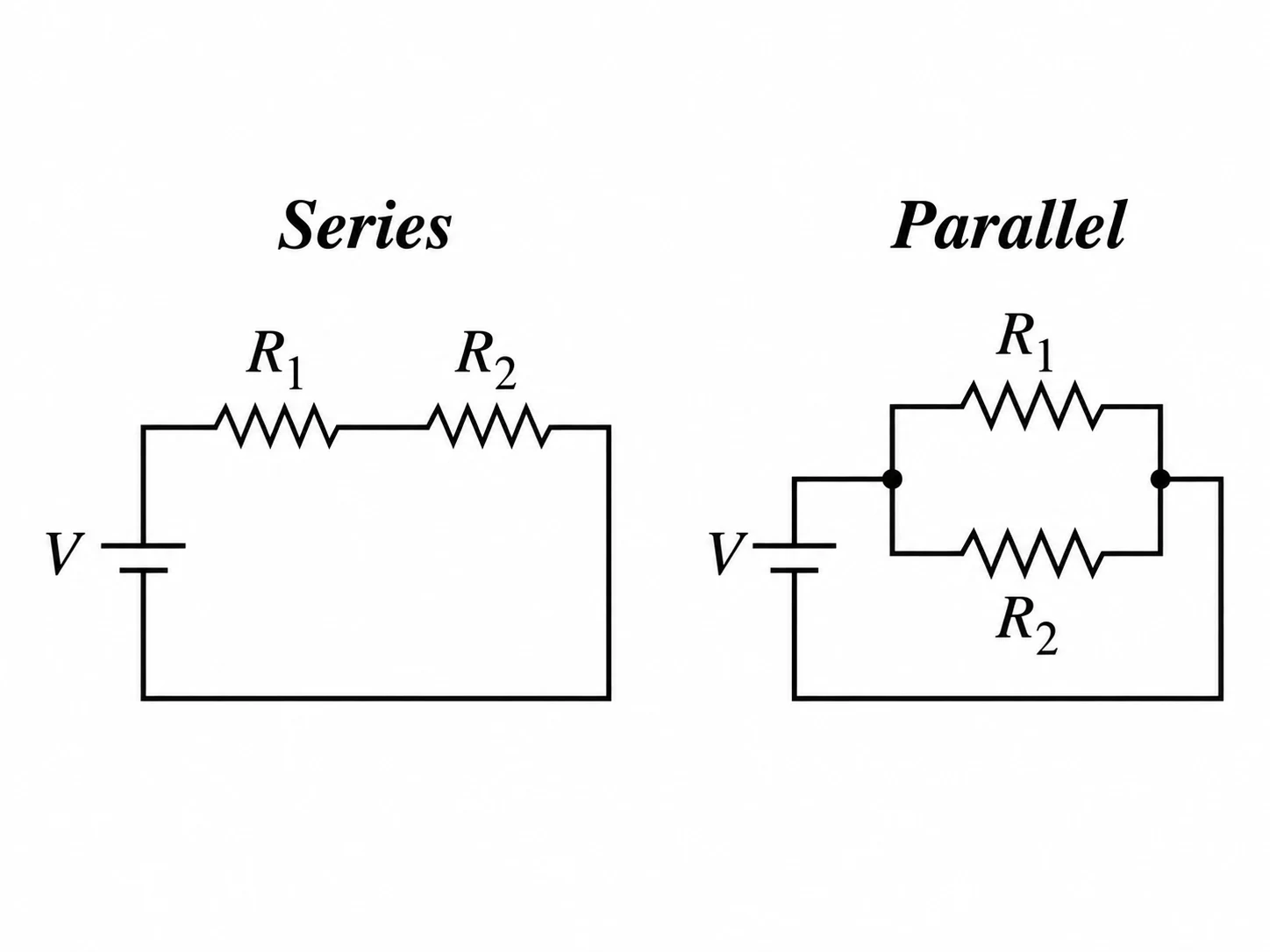
Series versus parallel
- Series: one path, so the same current flows through every resistor, and the supply voltage is shared between them.
- Parallel: several paths, so each branch has the same voltage, and the current splits, more of it through the smaller resistance.
A parallel combination is always smaller than its smallest resistor: adding a path makes it easier for current to flow.
How to solve a mixed circuit
- Collapse parallel groups into single equivalent resistors.
- Add the series parts to get the total resistance.
- Use for the total current from the supply.
- Work back out: find the voltage across each part, then each branch current.
- Check: currents into a junction equal currents out, and voltages around a loop add up to the supply.
Worked example: a series-parallel circuit
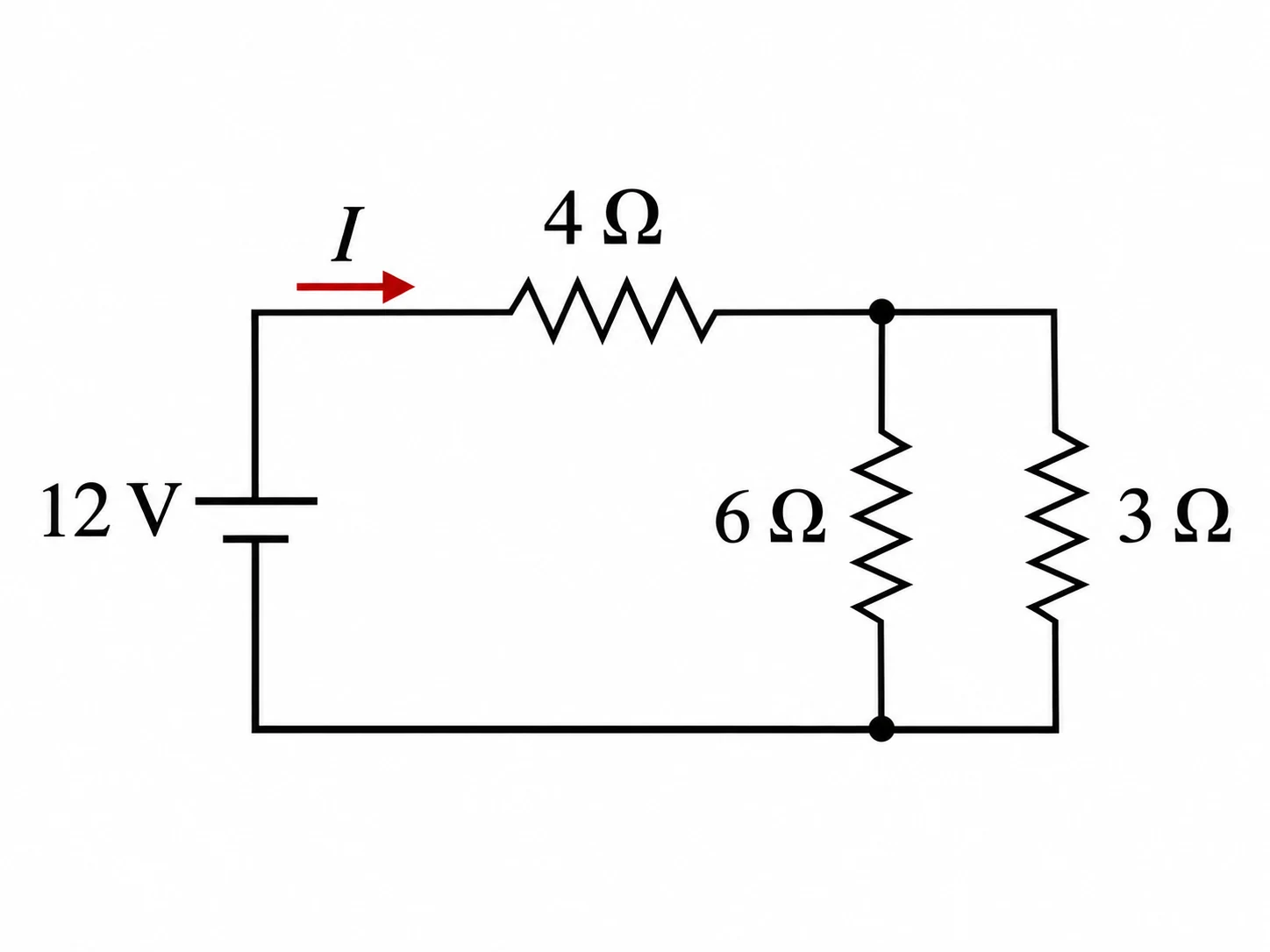
A V battery drives a resistor in series with a parallel pair of and . Find the total current, and the current through each of the parallel resistors.
Show the solution
Parallel pair:
Total resistance:
Total current:
Voltages: across the resistor, V; across the parallel pair, V (and V, which checks).
Branch currents: A and A, which add back to A.
Common mistakes
Adding parallel resistors like series ones
Parallel resistances combine through their reciprocals, and the result is smaller than either.
Using the supply voltage across one resistor in a series chain
In series the supply voltage is shared. Use the current and that resistor: .
Thinking current gets used up along a wire
Current is the same all the way round a series loop. It's energy (voltage) that gets used up.
Check your understanding
1. What is the combined resistance of and in parallel?
2. A V battery drives a resistor. What current flows?
3. In a parallel circuit, which quantity is the same across every branch?
Still not sure? Talk it through.
Waypoint Mentor's tutor explains this out loud, works through your own problems on a whiteboard, and checks you've got it. Free to start.