RC circuits: charging a capacitor
Physics · Senior school physics and first-year engineering · about 10 min
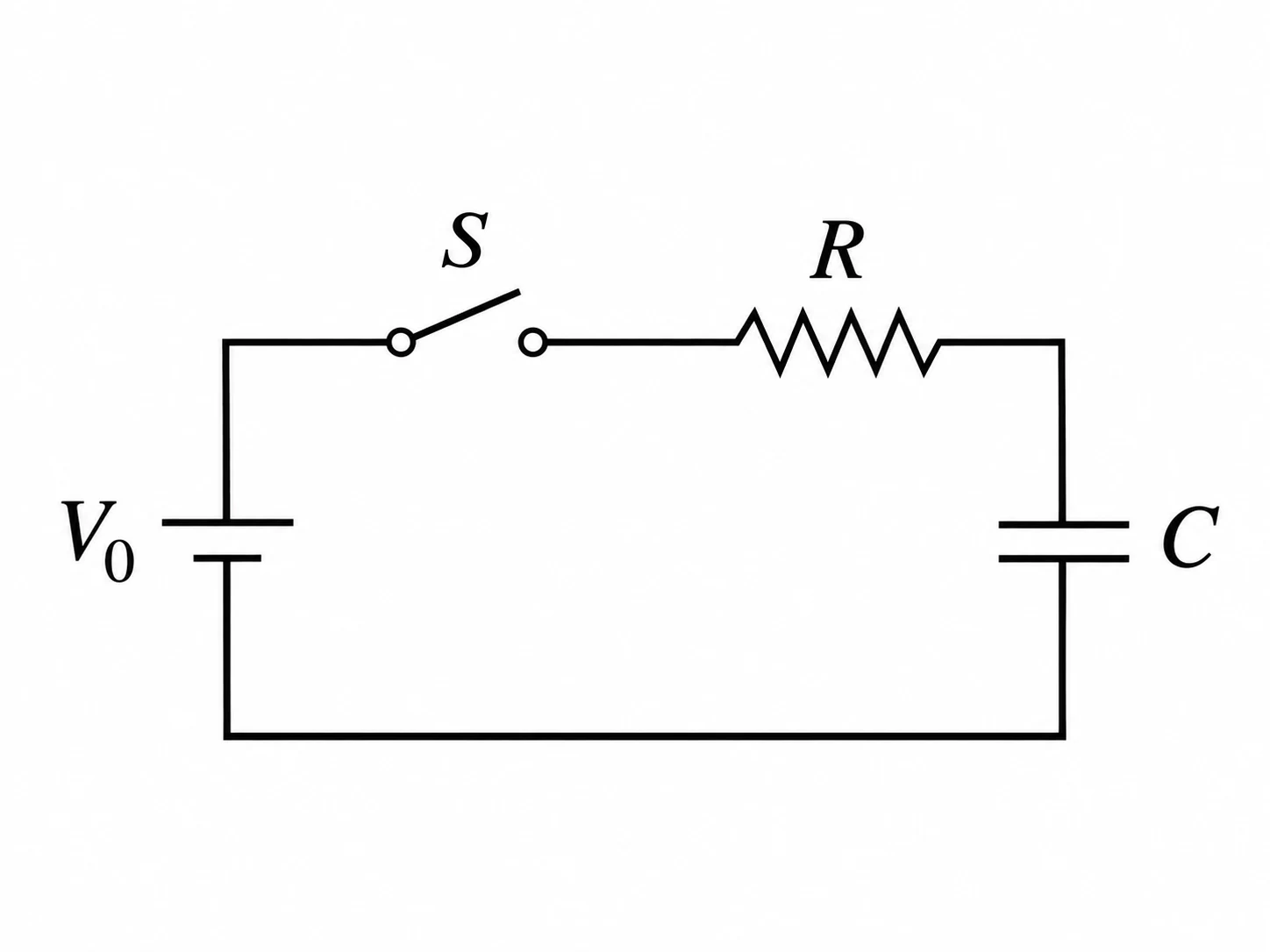
Connect a capacitor to a battery through a resistor and it doesn't charge instantly: the voltage rises quickly at first, then more and more slowly. That curve shows up in camera flashes, timer circuits and sensor filters, and it's all controlled by one number, the time constant.
The key idea
For a capacitor charging through a resistor from a supply :
and when discharging, .
What the time constant means
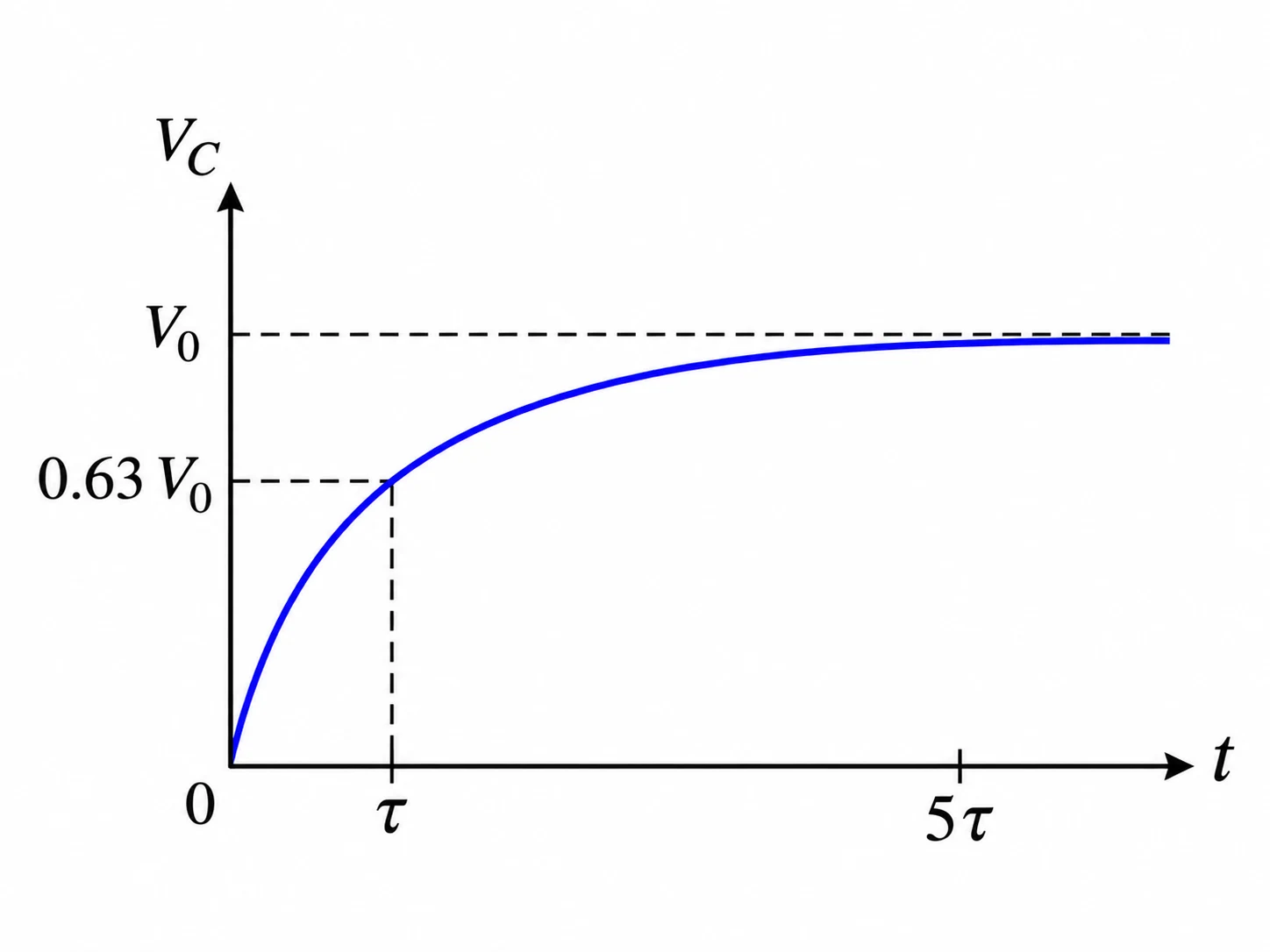
After one time constant (), a charging capacitor reaches of the supply voltage. After it's above , which is usually treated as fully charged.
has units of seconds: a resistor with a capacitor gives s.
Why it slows down
At the start the capacitor is empty, so the full supply voltage drives a big current through . As it charges, its own voltage pushes back, leaving less voltage across the resistor, so the current, and the rate of charging, keep falling. That's what produces the exponential curve.
Worked example: charging through 10 kΩ
A capacitor charges through a resistor from a V supply. Find the time constant and the capacitor voltage after s.
Show the solution
Time constant:
Voltage after s:
That's of the supply after two time constants.
Common mistakes
Forgetting the unit prefixes
F is F and k is . Getting these wrong changes by a factor of a million.
Thinking it's fully charged after one time constant
After it's only at . Use about for "fully" charged.
Using the charging formula for discharging
Discharging is : it falls towards zero, without the .
Check your understanding
1. What is the time constant for and ?
2. After one time constant, a charging capacitor has reached about what fraction of the supply voltage?
3. What happens to the charging current as the capacitor fills up?
Still not sure? Talk it through.
Waypoint Mentor's tutor explains this out loud, works through your own problems on a whiteboard, and checks you've got it. Free to start.