Projectile motion
Physics · Senior school physics · about 10 min
A kicked ball, a thrown stone or a jet of water all follow the same curved path. The trick to every projectile problem is to treat the horizontal and vertical motion separately: they share only the time.
The key idea
Launched at speed and angle , ignoring air resistance:
On level ground: time of flight , maximum height , range .
Two motions, one clock
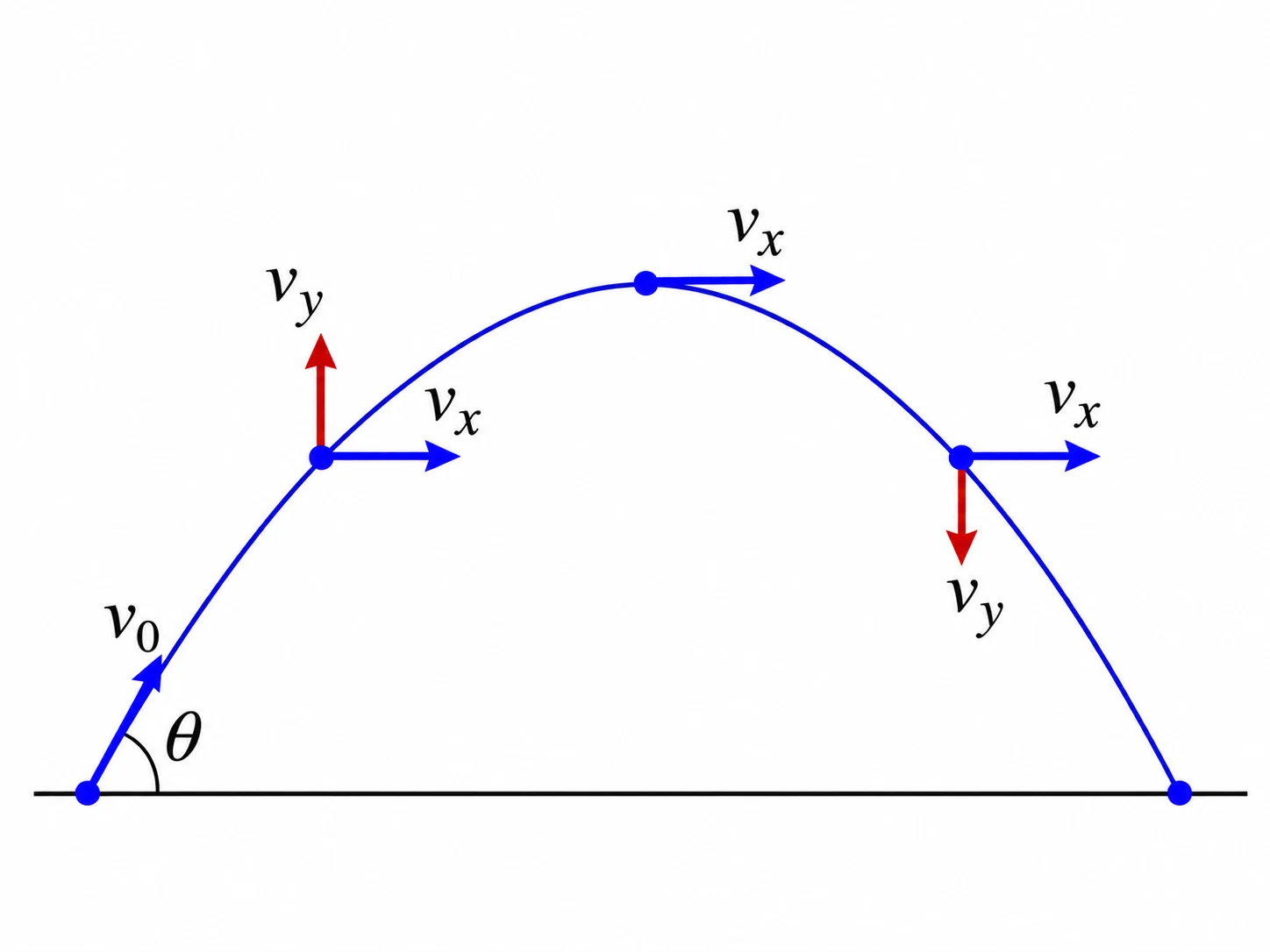
- Horizontally there's no force (ignoring air resistance), so the speed never changes: .
- Vertically gravity pulls down at , so it's motion with constant acceleration: .
Find the time from the vertical motion (when does it land?), then use that time in the horizontal motion.
The best angle
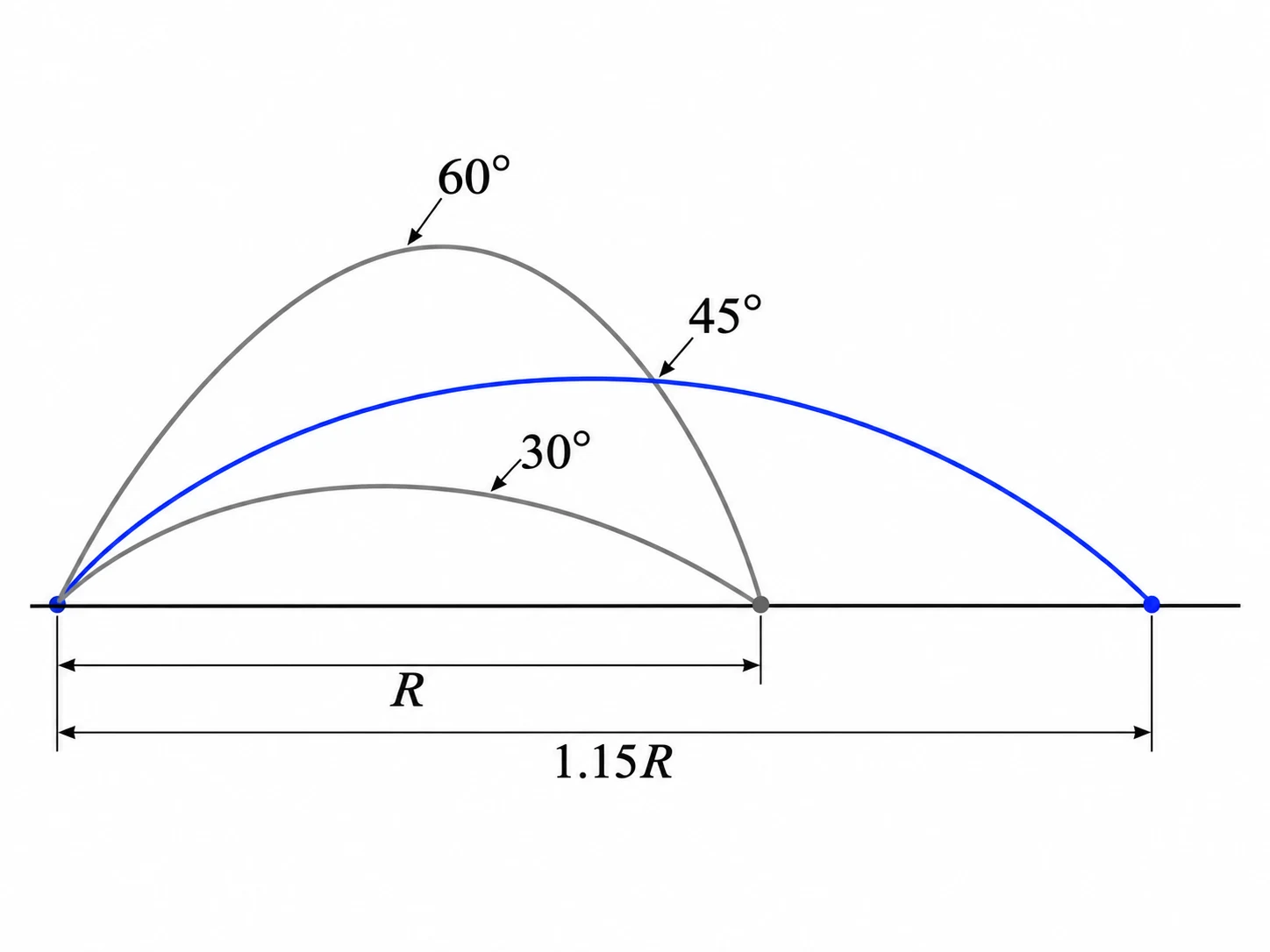
On level ground, the range is , which is largest when , at . Angles that add to (like and ) give the same range, but the steeper one goes higher and stays up longer.
Worked example: a ball kicked at 30°
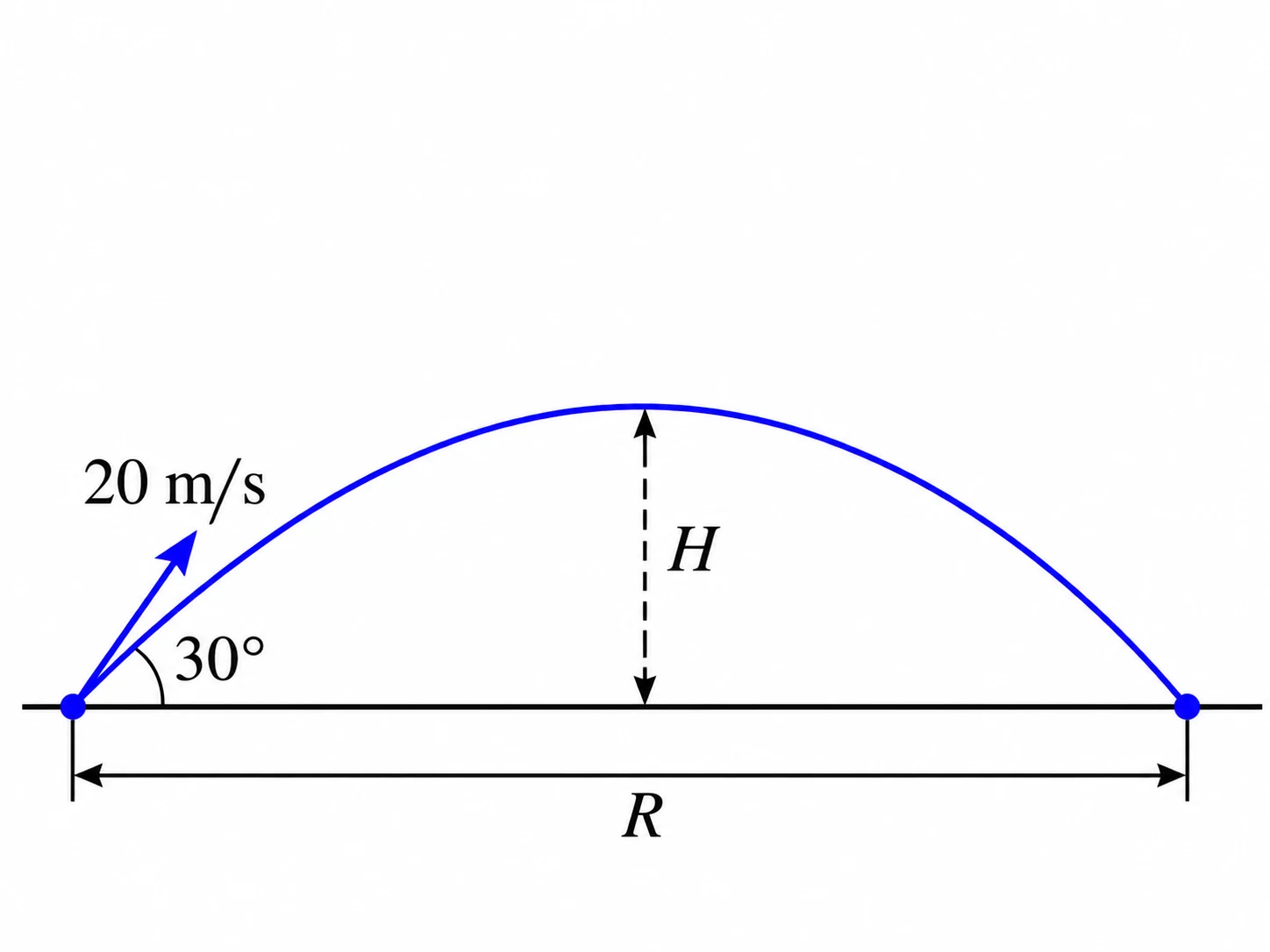
A ball is kicked from level ground at m/s, above horizontal. Ignoring air resistance and taking m/s, find its time of flight, maximum height and range.
Show the solution
Components: m/s, m/s
Time of flight:
Maximum height:
Range:
Common mistakes
Letting gravity slow down the horizontal speed
Gravity only acts vertically. Without air resistance, is the same the whole flight.
Using the launch speed in both directions
Split it first: horizontally and vertically.
Thinking the speed is zero at the top
Only the vertical velocity is zero at the top; the ball still moves sideways at .
Check your understanding
1. At the highest point of its flight, a projectile's vertical velocity is...
2. Which launch angle gives the greatest range on level ground (no air resistance)?
3. A ball is thrown horizontally at m/s from a cliff and lands s later. How far from the base does it land?
Still not sure? Talk it through.
Waypoint Mentor's tutor explains this out loud, works through your own problems on a whiteboard, and checks you've got it. Free to start.