Stress and strain
Engineering · Senior school and first-year engineering · about 8 min
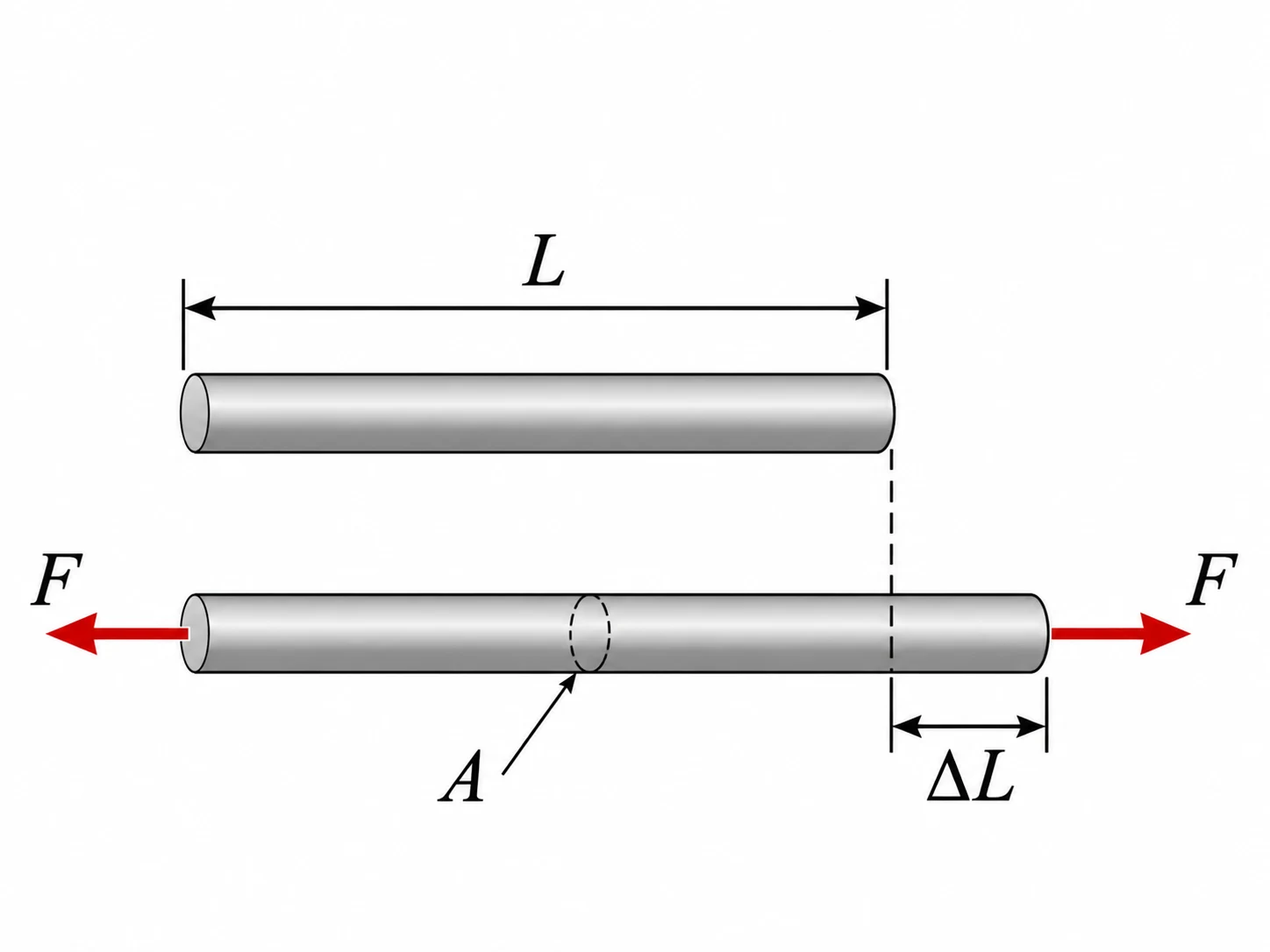
Pull on a steel rod and it stretches, a tiny bit. Stress describes how hard the material inside is being pulled, and strain describes how much it stretches. Together they tell you whether a part is safe and how much it will deform.
The key idea
Stress is force per area (in pascals), strain is the change in length over the original length (no units), and Young's modulus is the material's stiffness. Combining them gives the stretch directly: .
Try it yourself
The stress-strain curve
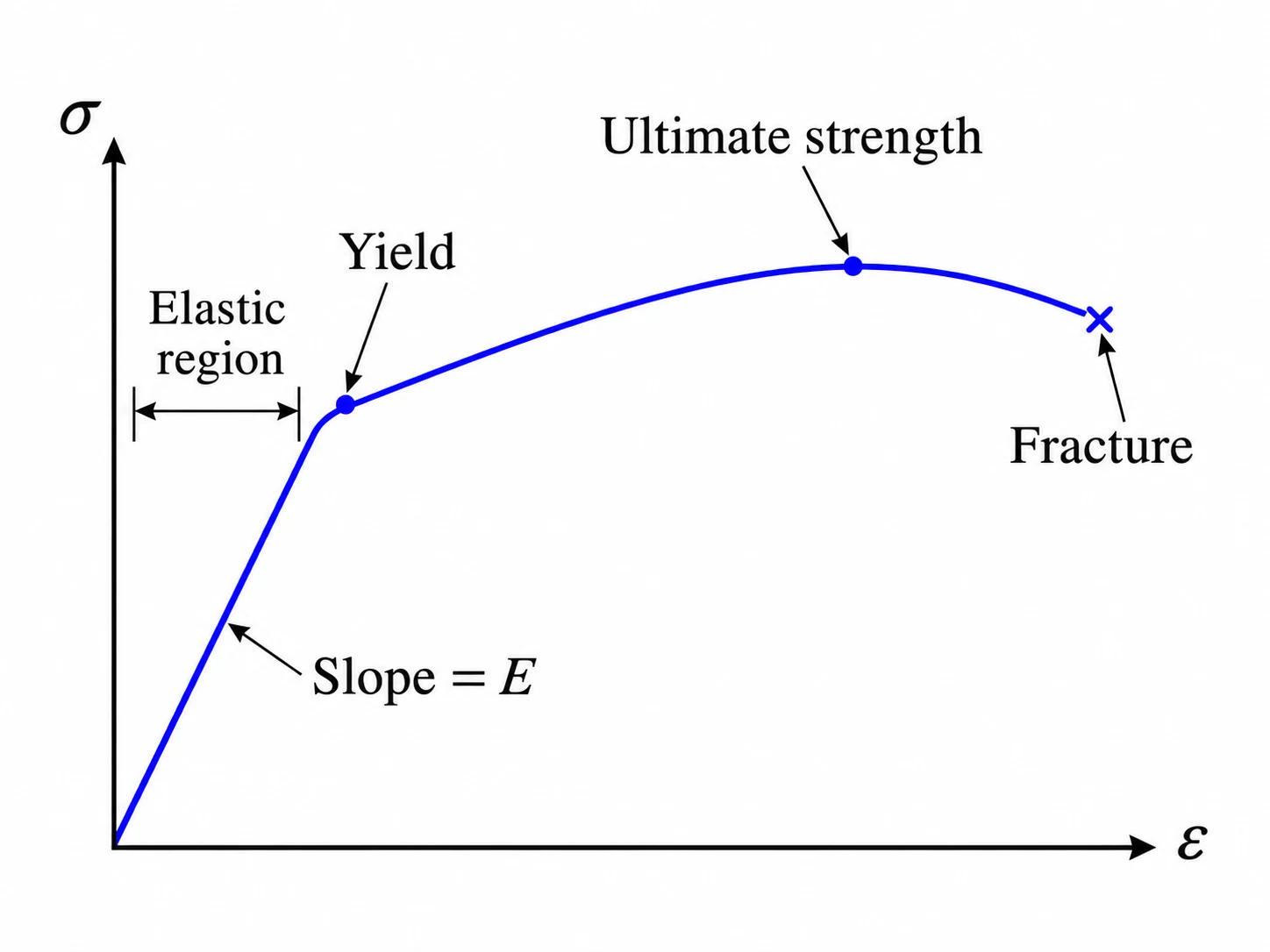
Test a sample and plot stress against strain:
- At first the line is straight: the material is elastic, and returns to its original length when unloaded. The slope of this line is .
- At the yield stress it starts to deform permanently.
- It keeps carrying more load up to the ultimate strength, then necks and breaks.
Designs normally keep stresses well below yield, so the straight-line part (Hooke's law) is the one you use most.
Typical values
| Material | Young's modulus |
|---|---|
| Steel | about GPa |
| Aluminium | about GPa |
| Concrete | about GPa |
| Rubber | about to GPa |
A higher means a stiffer material: the same stress produces less strain.
Worked example: a steel rod in tension
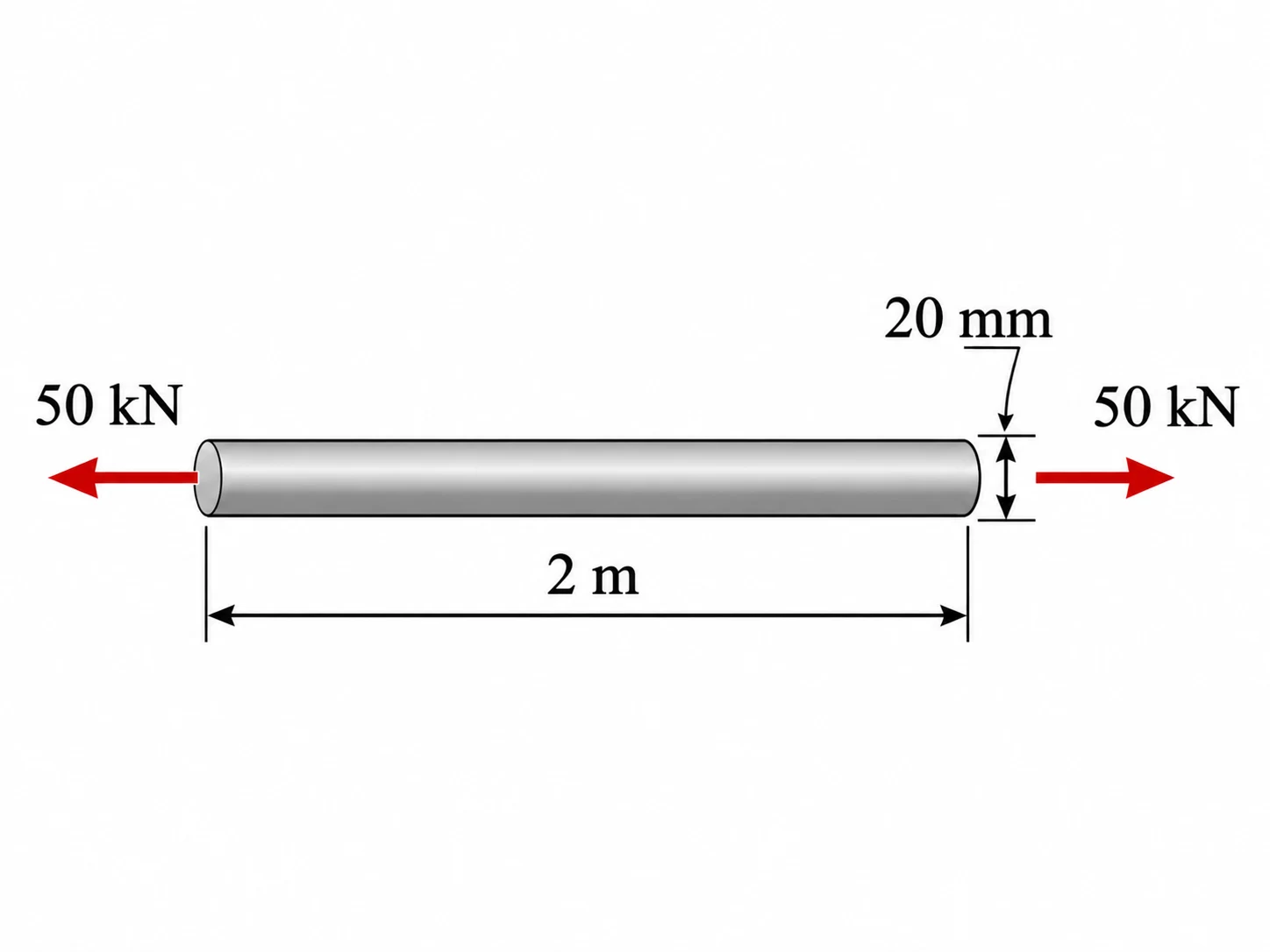
A steel rod m long and mm in diameter carries a tensile load of kN. Take GPa. Find the stress, the strain and the extension.
Show the solution
Area: m
Stress:
Strain:
Extension:
Common mistakes
Using the diameter as the radius when finding the area
with , or use .
Giving strain units
Strain is a length divided by a length, so it has no units. It's often quoted as a percentage or in microstrain.
Using Hooke's law past the yield point
only holds in the elastic region.
Check your understanding
1. What are the units of strain?
2. A kN load acts on a bar with cross-sectional area mm. What is the stress?
3. Two rods carry the same stress. One is steel, one aluminium. Which stretches more?
Still not sure? Talk it through.
Waypoint Mentor's tutor explains this out loud, works through your own problems on a whiteboard, and checks you've got it. Free to start.