Torsion in circular shafts
Engineering · Second-year engineering · about 10 min
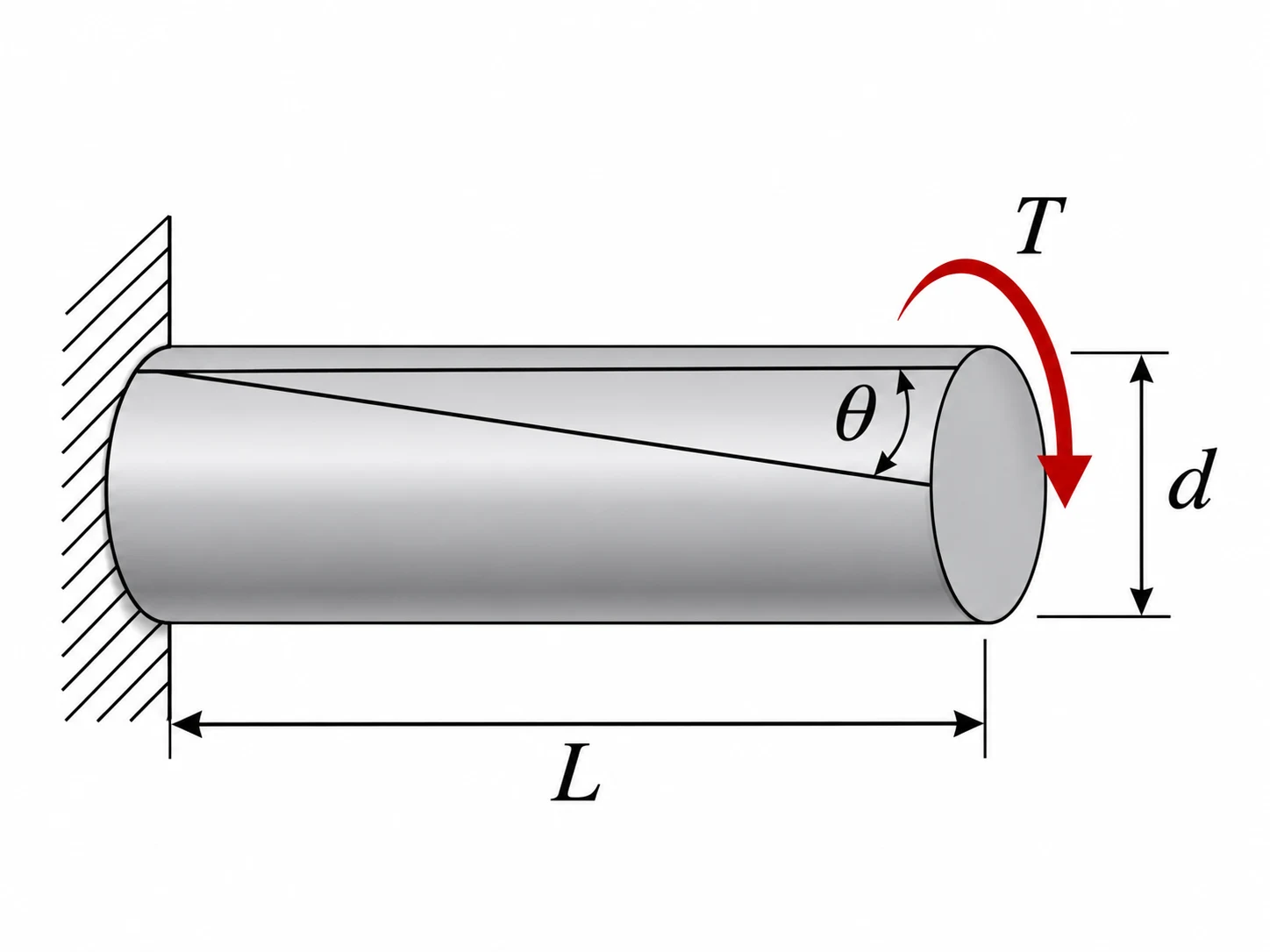
Drive shafts, axles and bolts being tightened all carry torque, a twisting moment. Torsion theory tells you how much shear stress that creates inside the shaft and how far the shaft twists, which is exactly what you need to choose a safe diameter.
The key idea
For a solid circular shaft of diameter carrying torque :
The shear stress is largest at the outer surface (), and the angle of twist (in radians) grows with length and falls with the shear modulus .
Try it yourself
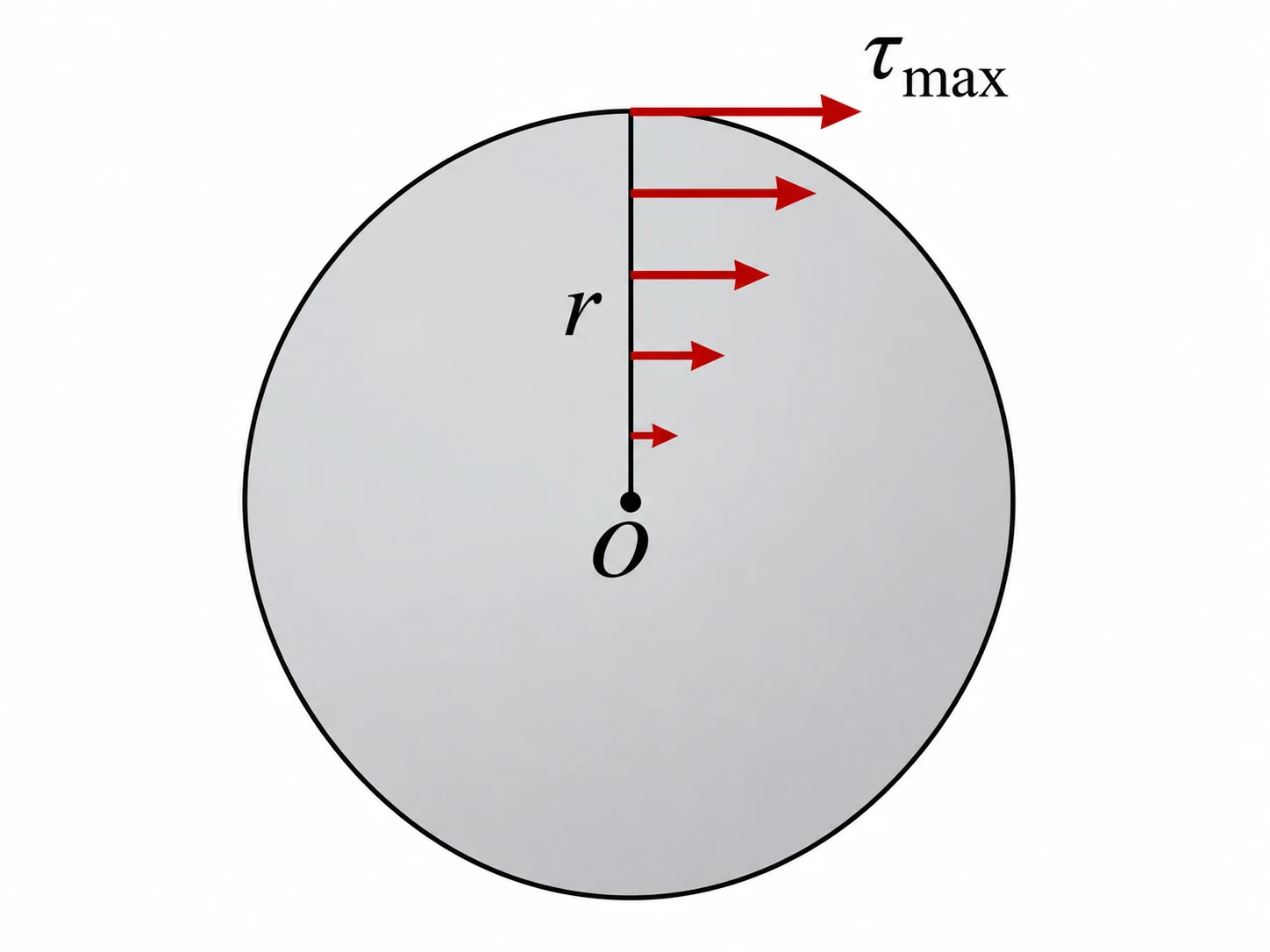
Why the stress is biggest at the surface
When a shaft twists, each cross-section rotates a little relative to the next. Material further from the centre moves further, so it is strained more, and the shear stress rises linearly from zero at the centre to its maximum at the outer edge. That's also why hollow shafts are efficient: the material near the centre does very little work.
The polar moment of area
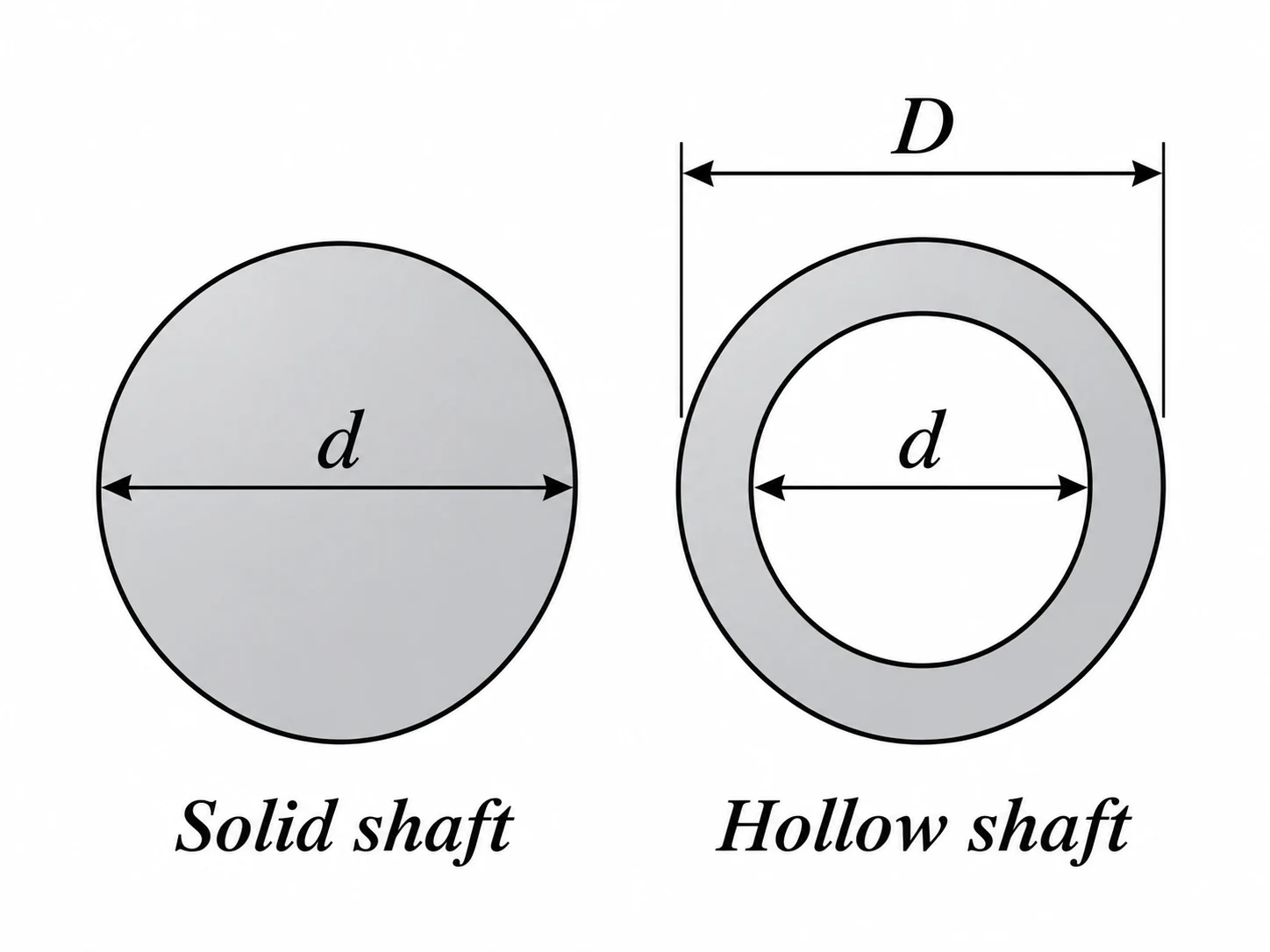
measures how well a cross-section resists twisting.
- Solid shaft:
- Hollow shaft:
Because of the fourth power, doubling the diameter makes the shaft sixteen times stiffer in torsion.
Worked example: stress and twist in a steel shaft
A solid steel shaft of diameter mm and length m carries a torque of N·m. Take GPa. Find the maximum shear stress and the angle of twist.
Show the solution
Polar moment of area:
Maximum shear stress at m:
Angle of twist:
Common mistakes
Using the diameter instead of the radius in the stress formula
uses the radius, .
Mixing millimetres and metres
Put everything in metres and newtons, and the answer comes out in pascals. A mm diameter is m.
Leaving the angle of twist in radians when degrees are asked for
Multiply by : rad is .
Check your understanding
1. Where is the shear stress largest in a twisted solid shaft?
2. If you double a solid shaft's diameter, its polar moment of area J becomes...
3. Doubling the length of a shaft under the same torque does what to its angle of twist?
Still not sure? Talk it through.
Waypoint Mentor's tutor explains this out loud, works through your own problems on a whiteboard, and checks you've got it. Free to start.